
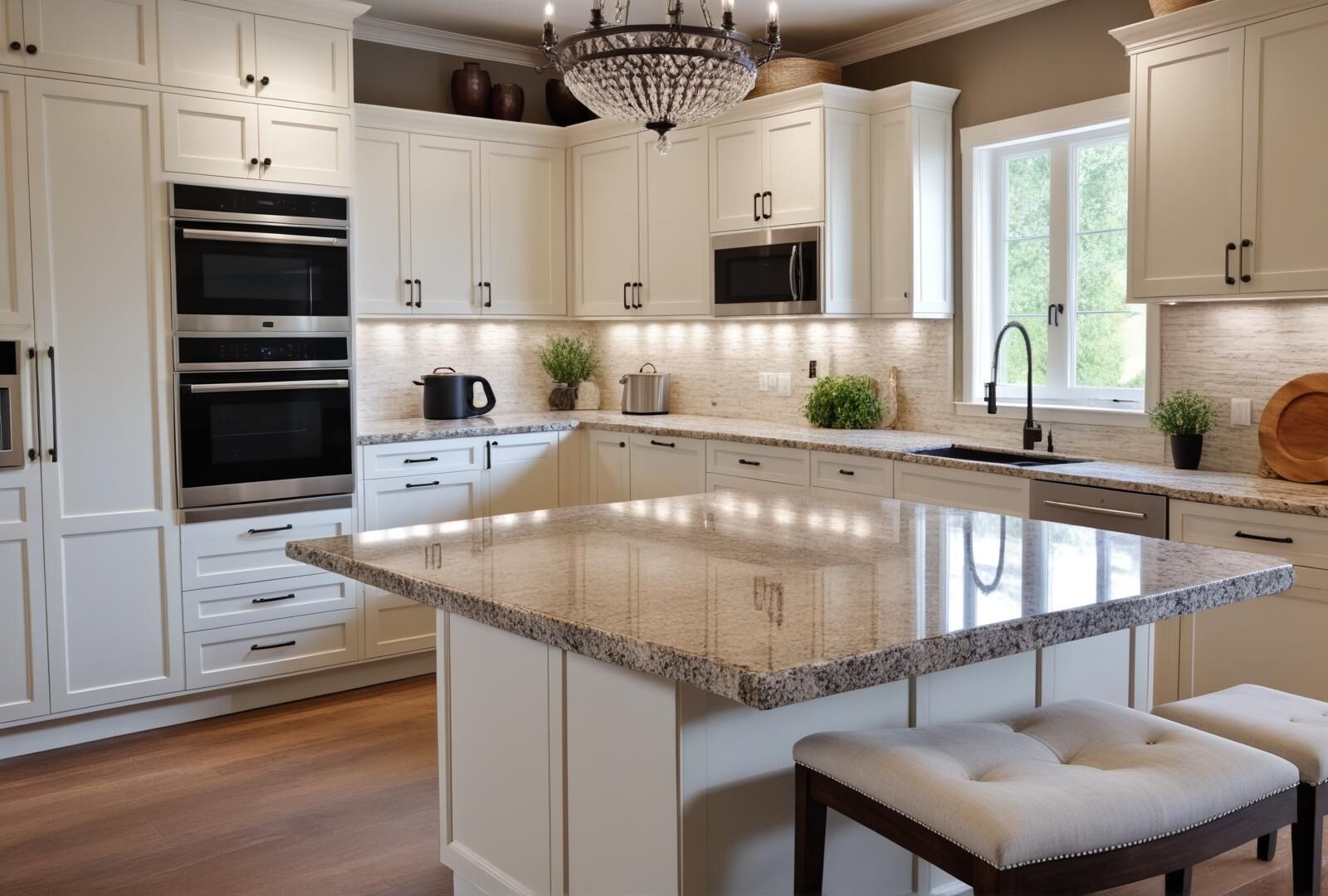



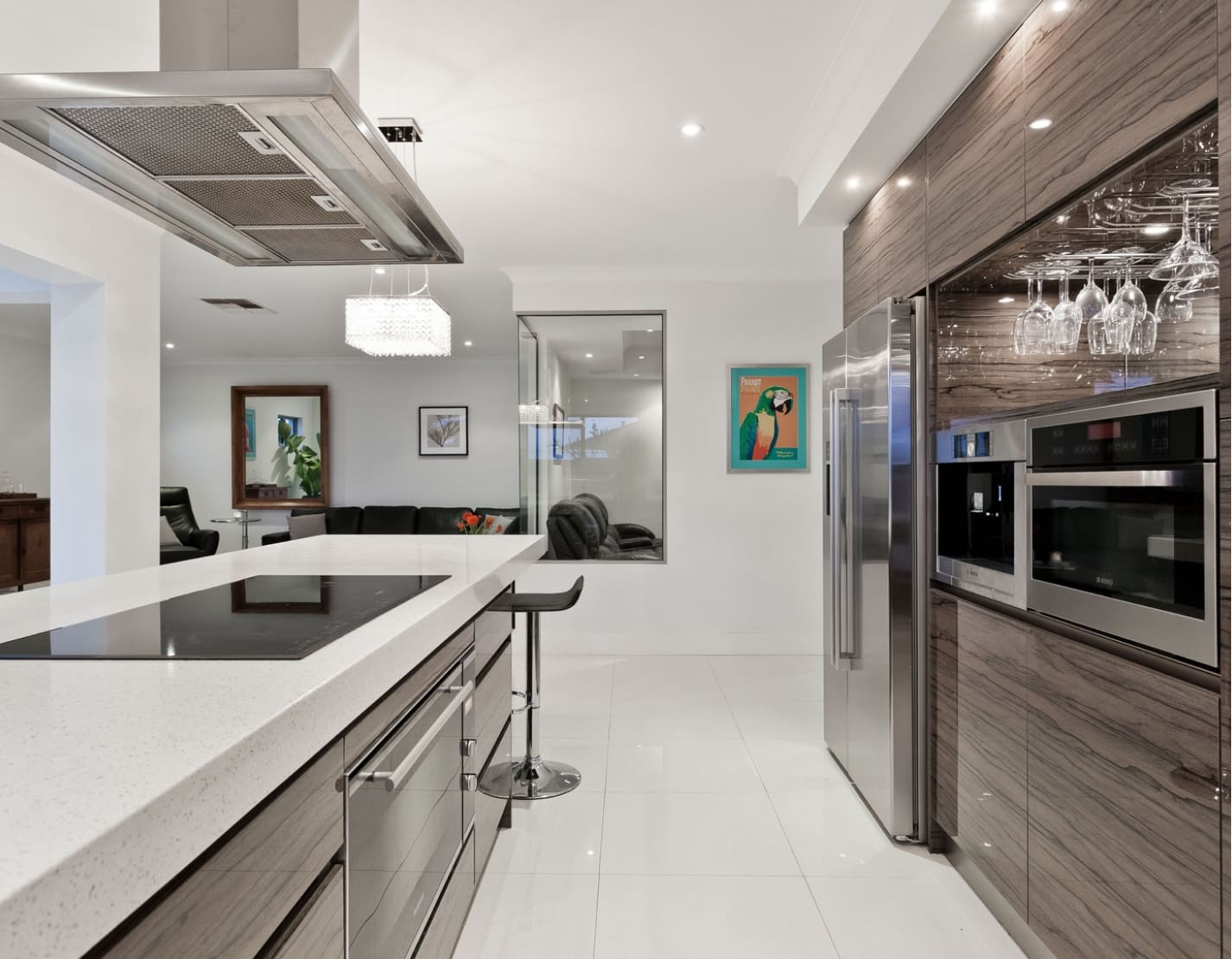

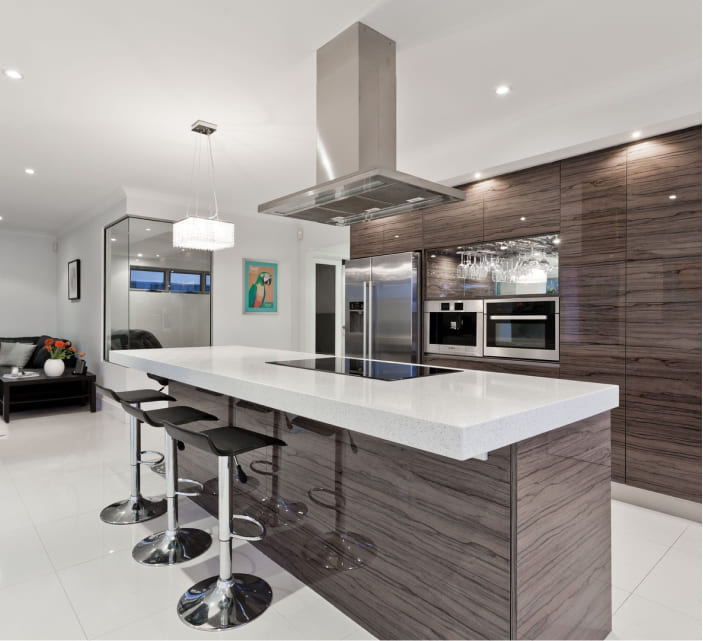
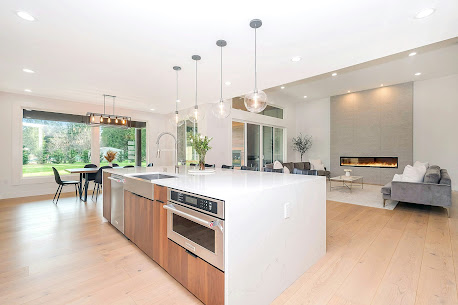

Most homeowners think about kitchen lighting at the very end of a renovation. The cabinets are installed, the countertops are set, and then someone asks: “Where should the lights go?” At that point, the answer is almost always a compromise. Electrical runs are fixed, ceiling heights are locked in, and the fixtures end up being chosen quickly, often from whatever is available at the nearest hardware store. The kitchen looks fine in photographs, but under actual cooking conditions, shadows fall exactly where you’re chopping onions and the granite countertop glares back at you every morning.
When homeowners search for companies offering kitchen lighting design consultation, they often treat lighting as an afterthought rather than a core design decision. That’s an expensive mistake. Lighting needs to be part of the kitchen conversation from day one, not bolted on after the cabinets are installed. This article covers how to find the right kitchen lighting consultant, what a proper consultation includes, what questions to ask before you hire anyone, and what the whole thing should cost. Alexa Kitchen in Patiala has spent over 15 years integrating lighting planning directly into its kitchen design process, which means homeowners across Punjab walk into their finished kitchens with layered, purpose-built lighting that actually works.
Why kitchen lighting is more complicated than it looks
The three layers every kitchen needs, and why most homes miss them
A well-lit kitchen is built on three distinct layers. Ambient lighting provides general illumination across the entire space. Task lighting focuses on work surfaces: countertops, the stove, and the sink. Accent lighting highlights cabinetry, islands, or design focal points. Many kitchens rely on a single overhead fixture as their only light source. That one fitting floods the ceiling with brightness while casting shadows directly onto every surface where you actually work. Missing even one of the three layers produces a kitchen that either feels unfinished or becomes genuinely tiring to spend time in.
Planning all three layers requires knowing where cabinets will sit before the electrician touches a wall. Under-cabinet task lighting, for example, is best wired during the rough-in stage, before cabinets are mounted, because retrofitting it afterward typically means opening walls or settling for plug-in solutions that limit placement. This is precisely why lighting needs to be part of the kitchen design conversation from the site survey forward, not added at the end.
How lighting affects both function and feel
Color temperature is the variable most homeowners overlook. The ideal range for a kitchen is 3,000K to 4,000K, warm enough to feel welcoming, cool enough for accurate color rendering when you’re preparing food. Go below 3,000K and the kitchen takes on an orange cast that makes everything look dim. Push above 4,000K and the space starts to feel clinical, like a hospital corridor with a backsplash. Either extreme makes a beautifully designed modular kitchen look wrong in photographs and worse in person.
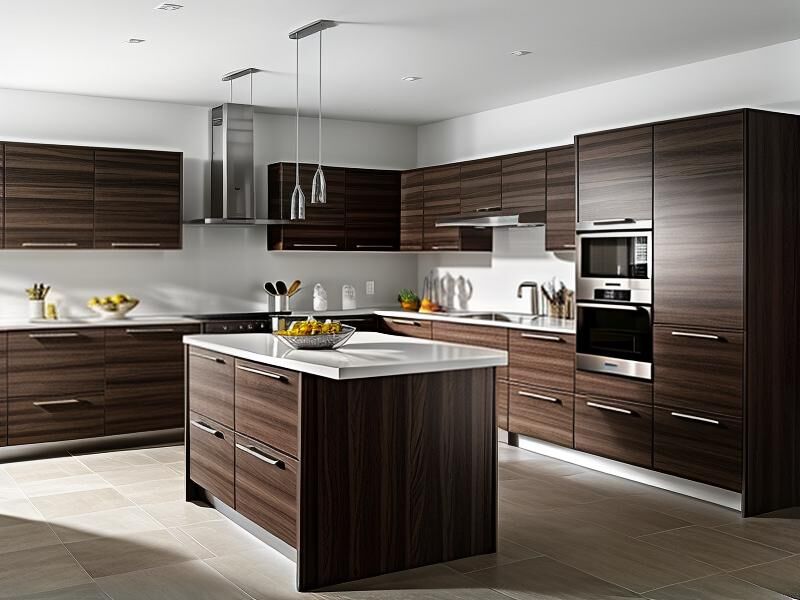
Glare is the other practical issue. Polished granite countertops, stainless steel appliances, and high-gloss cabinet finishes all reflect light directly into your eyes when fixtures are positioned without accounting for reflection angles. Proper lighting planning eliminates this by specifying fixture placement relative to surface materials. Beyond comfort, a well-designed lighting scheme can increase the perceived size of the space, improve hygiene and safety by eliminating dark corners, and enhance the kitchen’s appeal to future buyers. These outcomes justify the cost of professional residential lighting design services before the first fixture is purchased.
What companies offering kitchen lighting design consultation actually deliver
The deliverables you should receive
A proper consultation produces a custom lighting plan with fixture placement marked on a scaled floor plan, a fixture schedule with product specifications for every zone, lux and foot-candle calculations for task areas, and scale drawings showing aiming angles for directional fixtures. Most reputable kitchen lighting design services deliver finished plans within one to two days for a standard residential kitchen. Dimming and controls recommendations should also be included, especially if you’re planning a smart-home integration, because those decisions affect both wiring and fixture selection.
In India specifically, deliverables from professional studios also include photorealistic renderings, load schedules for the electrician, and post-installation support to verify that light levels match the design intent. What you should not accept is a fixture list without placement logic, or a “plan” that amounts to pointing at a catalog and picking what looks nice.
On-site visits vs. remote consultations
On-site visits allow the consultant to measure ceiling height, check existing electrical positions, assess how natural light enters the space at different times of day, and spot constraints that don’t show up on any floor plan. Remote consultations via video call work reasonably well for early-stage discussions and fixture shortlisting, but they consistently miss site-specific nuances. For kitchen renovations in older Punjab homes, where ceiling heights, beam positions, and wall construction rarely match standard assumptions, an on-site assessment is strongly recommended over any remote-only approach.
Studios that bundle the site survey into their design process eliminate this extra step entirely. Alexa Kitchen’s home check service, for example, covers spatial measurement, natural light assessment, and ceiling evaluation as part of the initial engagement, before a single design decision is made. That integration removes one entire round of back-and-forth between the homeowner, the designer, and the electrician.
How to find and evaluate companies offering kitchen lighting design consultation
Where to search and what to look for first
The main search channels are Houzz listings for local designers, ALA-certified firms for international projects, and direct searches for interior lighting consultancy studios offering end-to-end kitchen packages. Internationally, companies like Häfele offer free custom lighting design services with priced quotes; Kitchen Koncierge covers Orange County, California; and Lightology provides ALA-certified video consultations across the US. These are useful reference points for understanding what a professional service looks like. For examples of professional lighting design services, review specialist studio offerings to compare deliverables and scope.
For homeowners in North India, national chains often have limited on-ground presence in cities like Patiala or Ludhiana, worth verifying before you commit. That absence can create real coordination gaps when questions arise mid-project. Local studios with in-house design teams are generally the more practical route, both for accountability and for understanding the specific construction conditions common to Punjab homes.
Credentials and portfolio signals that matter
For international consultants, relevant credentials include IALD membership (International Association of Lighting Designers), NCQLP certification, and ALA professional certification, though the weight of each varies depending on whether the firm focuses on residential or commercial work. In India, the more directly relevant markers are the Certified Lighting Designer (CLD) designation, which requires at least three years of lead design experience, and Philips Lighting Academy certification for LED-specific expertise. For India-based interior studios, the more practical signal is whether lighting planning is explicitly part of their kitchen design process, not an optional add-on.
Portfolio signals that indicate real competency include before-and-after comparisons that demonstrate layered lighting (not just new fixtures), projects that show zone-by-zone control, and documented use of under-cabinet lighting and accent integration alongside ceiling fixtures. A portfolio of showroom-style images with no evidence of task lighting or dimming specifications is a warning sign, not a credential.
Red flags that signal an inexperienced consultant
Watch for consultants who propose the same fixture type throughout every zone, skip any discussion of color temperature or CRI (Color Rendering Index, which should be 80 or higher), and fail to provide a fixture schedule with product specifications. An inability to explain dimming options is equally telling. Any consultant who recommends fixtures without visiting or accurately measuring the space is guessing. Correcting a poor lighting plan after installation can be costly, it often requires opening walls, relocating electrical runs, and repainting. Price alone should never be the deciding factor here.
The questions to ask before you hire a kitchen lighting consultant
Questions about process and deliverables
Start with the fundamentals of how they work. The answers reveal immediately whether you’re talking to a professional or someone who recommends fixtures from a catalog:
- Do you conduct an on-site measurement, or do you work from floor plans only?
- What format does the final lighting plan come in, and will it include fixture placement on a scaled drawing?
- How many fixture options will I receive per zone?
- Do your recommendations include dimmer and controls specifications?
- Will you coordinate with my contractor or kitchen studio during installation, or does your involvement stop at the plan stage?
- How many revision rounds are included before the plan is finalized?
Questions about fees, timelines, and accountability
Ask whether the fee is fixed or hourly, and what triggers additional charges beyond the base engagement. Confirm how long the process takes from the first site visit to the final delivered plan. Ask specifically whether the consultant has experience with the finish materials in your kitchen: high-gloss cabinetry, stone countertops, and stainless steel all require different fixture positioning and shielding decisions. Request two or three completed kitchen lighting projects you can reference directly. Finally, ask what happens if the lighting doesn’t perform as specified after installation, a professional will have a clear answer, and an inexperienced one will not.
What kitchen lighting design services typically cost
Pricing across India and international markets
In India, kitchen lighting consultation is rarely sold as a standalone service. When priced independently, budget to mid-range freelance designers charge between ₹5,000 and ₹30,000 as a fixed fee. Premium interior studios in metro cities charge ₹20,000 to ₹75,000, often structured as 3 to 5 percent of the total kitchen project budget. Hourly engagements, when available, typically run ₹2,000 to ₹6,000 per hour. In the US, independent lighting designers charge $500 to $2,500 for a single kitchen on a fixed-fee basis, while boutique studios with full specification services charge $3,000 to $7,000 or more. In the UK, fixed fees for residential kitchen lighting design range from £400 to £3,000 for most projects, with premium London-based studios charging considerably more. These figures cover the consultation and design plan only, fixture procurement and installation are separate costs in every market.
When coordinating separate vendors stops making financial sense
The fragmented approach carries hidden costs that are easy to underestimate. A standalone lighting consultation fee, separate kitchen design fees, separate electrician coordination, and the time spent aligning three different professionals across multiple site visits adds up quickly. More critically, when the lighting plan is developed independently from the kitchen design, there’s always a reconciliation problem: the cabinet layout changes slightly, the ceiling beam shifts the recessed light placement, and now two professionals need to rework their documents. When a studio integrates lighting design into the kitchen package from the site survey stage, the plan doesn’t get retrofitted. It’s built in from day one, and the homeowner has a single point of accountability through completion.
How Alexa Kitchen handles lighting as part of every kitchen design
What integration actually means in practice
At Alexa Kitchen, lighting placement is treated as a core component of the kitchen design, not a separate engagement tacked on after the cabinets are specified. From the initial home check through to installation, the in-house design team accounts for cabinet positioning, ceiling height, natural light entry points, and finish materials before making any fixture or zone recommendations. Homeowners in Patiala and across Punjab don’t need to source a separate lighting consultant because the design brief already covers ambient, task, and accent zones as part of the same workflow.
Why this approach serves Punjab homeowners better
Kitchen spaces in older Patiala homes often have lower ceiling heights, limited natural light, and non-standard layouts that don’t fit generic design templates. Working with a local studio that has deep experience with these specific conditions means the lighting plan is grounded in what actually works in these homes, not what looks good in a Delhi showroom. The team understands how Indian cooking affects ventilation and light positioning, how smoke from high-heat cooking interacts with indirect ceiling fixtures, and how to compensate for the natural light patterns common to Punjab homes.
Alexa Kitchen’s tiered packages cover cabinetry, finishes, and installation end-to-end, with lighting planning built into each tier. That means you’re not paying a separate consultation fee on top of your renovation budget. The result is a kitchen where the lighting works with the design, not against it.
Getting your kitchen lighting right from the start
Finding the right company comes down to knowing what to look for: verified credentials, proper deliverables including scaled plans and fixture schedules, clear answers to the process and accountability questions covered above, and transparent pricing with no ambiguous add-ons. The market offers qualified options across every budget, but the smarter move for most homeowners is to work with a full-service studio where lighting design is already part of the package. That single decision eliminates the coordination overhead, the revision cycles between separate professionals, and the expensive mistakes that happen when lighting is planned without a complete picture of the kitchen design.
If you’re comparing companies offering kitchen lighting design consultation, look for a studio that integrates lighting from day one rather than treating it as an add-on service. For homeowners in Patiala and Punjab, Alexa Kitchen offers that single point of accountability, from the first site survey through to final installation, the lighting plan is specific to your space and built by a team with hands-on experience in these homes. Book a free home check to get started. It’s the most practical first step toward a kitchen that performs as well as it looks.